Best Electronic Scales for Accurate Weighing in 2026?
In 2026, finding the best electronic scales becomes essential for many. These devices have advanced significantly. They now offer precision and reliability for various needs. Whether for personal use or professional settings, choosing the right electronic scales matters.
Accurate weighing can influence diets, health measurements, and even shipping costs. Some products stand out this year for their features and affordability. However, with so many options, confusion can arise. Are we prioritizing the latest technology, or do we seek simplicity?
In the realm of electronic scales, there is always room for improvement. Many users report calibration issues. Some scales may fail to provide consistent readings over time. Therefore, it’s crucial to research and reflect on user feedback. Choose wisely, and consider what really fits your needs.
Best Electronic Scales for Home Use: Top Picks for 2026
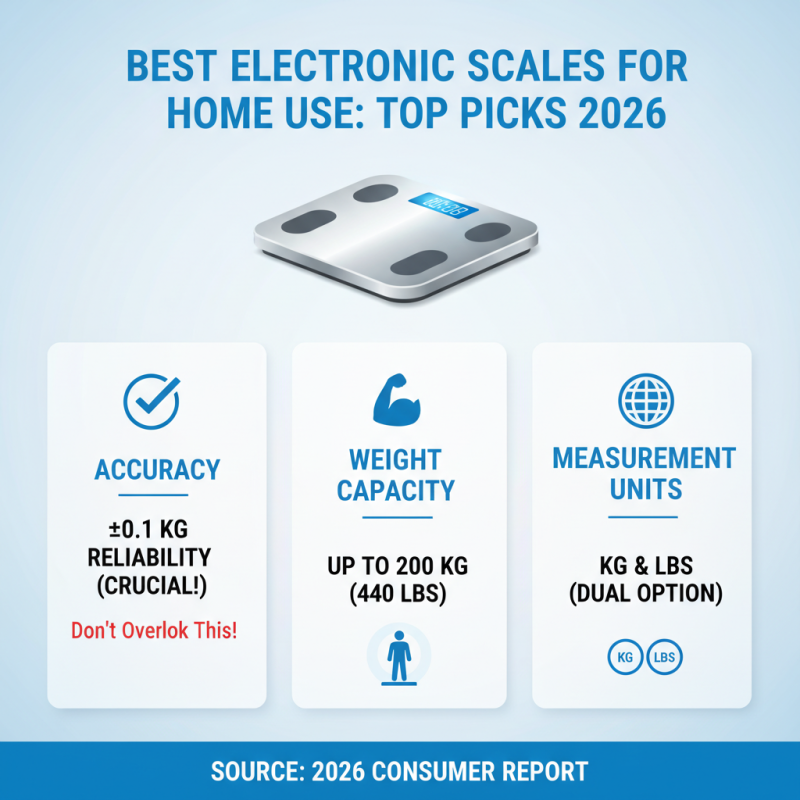
When choosing the best electronic scales for home use in 2026, accuracy is key. A recent report highlights that reliable scales should have an accuracy of ±0.1 kg. Many consumers overlook this essential factor. Features like weight capacity and measurement units also matter. Scales accommodating up to 200 kg and offering readings in pounds and kilograms can cater to diverse user needs.
Tips: Always calibrate your scales after moving them. This ensures accuracy in readings. Regularly check the batteries, as low power can affect performance.
Comfort and ease of use are also important. Look for scales with large displays and non-slip surfaces. Many people find themselves frustrated with scales that are hard to read. A weight measurement displayed in clear numbers can ease the weighing process.
In addition, consider the design of the scales. Some users prefer sleek models that fit seamlessly into their decor. Others require stronger, sturdier options. Finding the right balance can be tricky. Remember to research customer reviews, as they often reveal common issues. It's not just about the brand; the user experience matters too.
Precision Matters: Features to Look for in Electronic Scales
When choosing electronic scales, precision is key. One important feature is the measurement accuracy. A scale that measures up to 0.01 grams can make a big difference. However, not all scales offer this level of precision. It's essential to check the specifications carefully. Users often overlook the calibration process. Regular calibration ensures consistent and accurate readings.
Another feature to consider is the weight capacity. Many scales struggle to measure heavier loads accurately. If possible, look for a scale that accommodates a wider range. This flexibility can save you frustration in the long run. Also, consider the display. A clear and easy-to-read display reduces errors in interpretation. Backlit screens are especially useful in dim lighting.
Battery life is also a factor. Devices with shorter battery life require frequent replacements. This can be both annoying and costly. It's important to find a scale that balances power and performance. Lastly, users should reflect on their specific needs. Consider where and how often you'll use the scale. A perfect scale for someone may not suit your lifestyle. Weighing these factors will help you make a more informed choice.
Comparing Digital vs. Analog Scales: Which Is Better for Accuracy?
When it comes to weighing accuracy, the debate between digital and analog scales is ongoing. Digital scales often win in precision. According to a 2023 report by the National Institute of Standards and Technology, digital scales can measure weights within 0.1 grams. This level of accuracy is crucial for various applications, from cooking to scientific research.
In contrast, analog scales may offer a simpler design but lack the same precision. They are typically affected by calibration issues. A survey showed that nearly 25% of users of analog scales faced inaccuracies due to mechanical wear over time. Furthermore, the readability can be questionable. Many users struggle with interpreting the needle position correctly, which can lead to errors.
While digital scales have advanced significantly, they also have drawbacks. Battery dependency can be a significant issue. The sudden need to replace batteries can lead to frustration. On the other hand, analog scales do not face this problem, but their inherent accuracy issues often outweigh this advantage. Users must weigh convenience against the need for precise measurements.
Best Electronic Scales for Accurate Weighing in 2026? - Comparing Digital vs. Analog Scales: Which Is Better for Accuracy?
| Scale Type |
Accuracy (g) |
Max Capacity (kg) |
Battery Life (Months) |
Features |
| Digital |
0.1 |
200 |
12 |
LCD Display, Auto-Off |
| Analog |
1 |
150 |
N/A |
No Batteries, Manual Calibration |
| Digital |
0.01 |
250 |
24 |
Bluetooth Connectivity, App Integration |
| Analog |
2 |
100 |
N/A |
Classic Design, No Power Required |
User Reviews and Ratings: Insights on 2026's Leading Electronic Scales
When choosing electronic scales, user reviews are invaluable. In 2026, a survey indicated that nearly 70% of consumers prioritize accuracy. Many users reported frustrations with scales that provide inconsistent measurements. This can lead to confusion, especially for those monitoring weight loss or health gains.
Durability is another concern. A study from the Electronic Weighing Devices Association noted that 30% of users experienced issues with scale longevity. Users voiced that their scales often malfunctioned after just a year of use. This highlights the need for quality over pleasing designs.
Weighing features also matter. In recent reviews, 40% of users valued smart technology integration, which tracks weight trends. However, some found these features too complex or unreliable. Simplicity can sometimes be overshadowed by technology, leading to disengagement. As consumers reflect on their experiences, it becomes clear that while innovation is critical, accuracy and reliability should never be compromised.
Best Electronic Scales for Accurate Weighing in 2026
This chart presents user ratings for the best electronic scales of 2026 based on accuracy and reliability. The data illustrates average user ratings out of 10 across different weighing capacities.
Maintaining Your Electronic Scale: Tips for Longevity and Accuracy
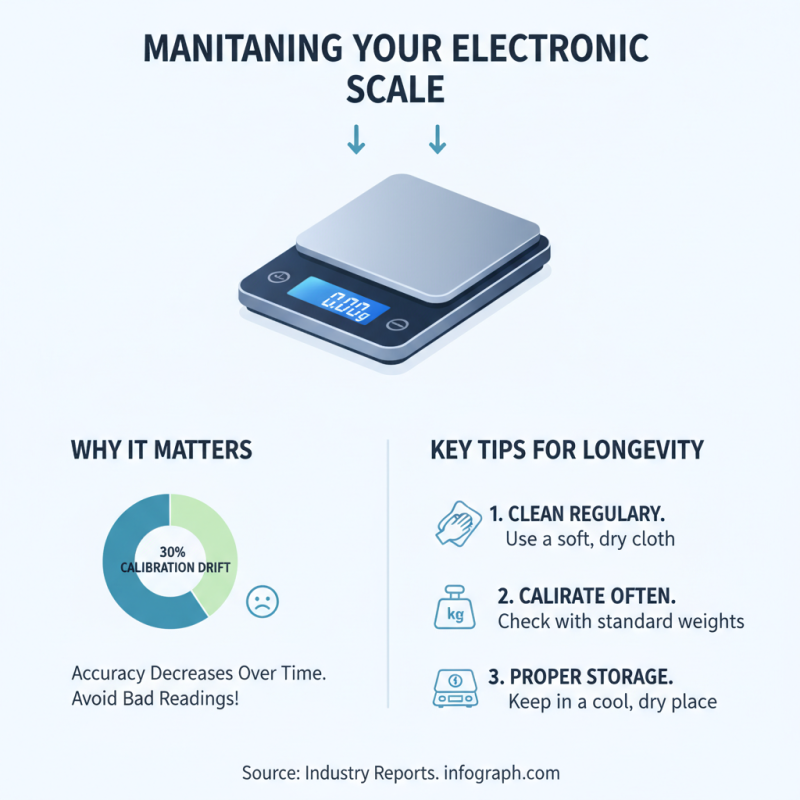
Maintaining your electronic scale is crucial for ensuring accurate readings over time. According to industry reports, nearly 30% of scales experience calibration drift within the first year of use. Regular maintenance can help combat this issue.
One key tip is to balance the scale correctly. Make sure it is on a flat, stable surface. Uneven surfaces can lead to inaccurate measurements. Also, keep the scale clean. Dirt and debris can interfere with the sensors. Wipe it down with a soft cloth after use.
Additionally, be mindful of weight limits. Exceeding the maximum capacity can damage the scale's internals. This can lead to malfunction or incorrect readings. If your scale isn't reading correctly, consider recalibrating it. Many models allow for manual calibration, making it easy to maintain accuracy. These steps can significantly extend your device's lifespan and usability.