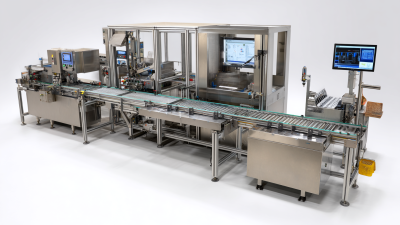
Global buyers are paying closer attention to checkweighing accuracy, data visibility, and supplier reliability. Checkweigher Online purchasing now supports faster comparisons across food, pharmaceutical, and consumer-goods production lines. Buyers can inspect weighing ranges, belt speeds, reject systems, software compatibility, and after-sales service before requesting quotations.
Market research indicates steady growth. Grand View Research estimates that the global checkweigher market will expand through 2030, supported by stricter quality controls and automated packaging lines. MarketsandMarkets also identifies food and pharmaceutical manufacturing as major demand sectors. These trends matter on the factory floor. A missed underweight pack can create waste, customer complaints, or costly recalls.
Performance varies widely.
A supplier’s catalogue is not enough. Experienced buyers should verify test conditions, calibration procedures, hygienic design, and local technical support. Certification claims also require careful checking against current standards and customer requirements. As Mettler Toledo’s product guidance repeatedly stresses, checkweighers must be integrated into the complete production process, rather than treated as isolated scales. That principle is easy to overlook.
This guide evaluates leading Checkweigher Online suppliers for global buyers. It considers equipment accuracy, inspection technology, customization, delivery capability, documentation, and service response. Some market figures differ between research firms, so readers should treat forecasts as directional rather than absolute. Practical trials remain essential. A machine that performs well with dry cartons may struggle with flexible pouches, condensation, vibration, or uneven product spacing.
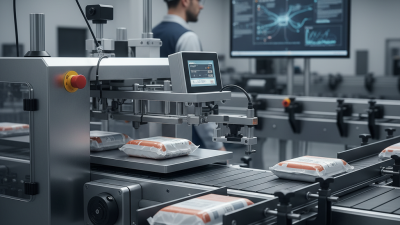
Modern production lines need weight control without stopping the flow. An online checkweigher measures sealed products as they pass over a conveyor. It can identify underweight packs, excess filling, and unstable process trends within seconds. Operators see live readings on a production screen. That visibility supports faster adjustments to fillers, dosing units, and packaging equipment.
The International Federation of Robotics’ World Robotics 2024 report recorded 4.28 million industrial robots operating worldwide in 2023. This growth shows how manufacturers are connecting inspection with automated handling. An online checkweigher can trigger automatic rejection, record batch data, and send alerts to quality teams.
It also helps reduce product giveaway. Small savings matter. UNEP’s Food Waste Index Report 2024 estimated 1.05 billion tonnes of food were wasted in 2022 across households, food service, and retail. Accurate filling cannot solve food waste alone, but it addresses one avoidable loss inside the factory.
Reliable performance depends on practical details. The unit needs stable conveyors, correct belt speed, hygienic construction, and routine verification with certified test weights. OIML R 87 provides international guidance for the quantity control of packaged products.
However, digital dashboards can create false confidence when sensors drift or staff skip checks. That weakness deserves attention. Production teams should review rejected packs, environmental changes, and calibration records together. A well-integrated system improves traceability, yet human judgment still decides whether unusual data reflects a real process fault.
When comparing online checkweigher suppliers, start with measurement evidence, not polished product photographs. Ask for rated speed, platform range, smallest detectable weight, and accuracy under real line conditions. A machine claiming 120 packs per minute may perform differently with wet, unstable, or reflective products. Request a recorded trial using your package, product, and target tolerance. Include reject timing, belt width, and maximum product length. These details expose hidden limitations.
OIML R 51-1:2016 provides a useful reference for automatic catchweighing instruments and accuracy classes. Compare the supplier’s stated class with your legal metrology requirements and internal giveaway limits. Check whether calibration records, test weights, and audit trails are included. Sanitary design matters too. Look for tool-less belt removal, sloped surfaces, sealed load cells, and stainless construction. Ask for IP rating, temperature range, washdown method, and foreign-object control.
“Food grade” alone is too vague.
Connectivity deserves equal attention. The 2024 Smart Manufacturing and Operations Survey reports that 92% of surveyed manufacturers viewed smart manufacturing as important to competitiveness. Therefore, compare protocols, data export formats, remote diagnostics, and cybersecurity controls. The PMMI 2024 State of the Industry report also identifies labor pressure and automation as continuing investment drivers.
A supplier should show changeover time, training hours, spare-part availability, and service response targets. I would not accept “high accuracy” without test data. Online quotes often omit installation, validation, and reject verification. That omission can distort total cost.
Recheck every assumption.
Global buyers should evaluate a checkweigher beyond its purchase price. Performance starts with evidence, not attractive brochures.
Ask suppliers for verified accuracy data, test conditions, product samples, and operating speed. OIML R 51-1:2016 provides recognized requirements for automatic catchweighing instruments. Use it when comparing tolerance, repeatability, and calibration procedures.
FAO’s State of Food and Agriculture 2019 estimates that 14% of global food is lost between harvest and retail. Accurate weighing can reduce giveaway and improve material control, although it cannot solve every production loss.
Request a product trial using your actual packages, including unstable pouches or wet containers. Record rejected packs, belt speed, product spacing, and cleaning time. A supplier that shares raw test results earns more confidence than one showing only best-case figures.
PMMI’s 2024 State of the Industry report places U.S. packaging machinery shipments at approximately 10.2 billion dollars in 2023. That investment level suggests automation remains important, but spending data does not prove individual supplier quality.
Check service depth before signing. Confirm spare-parts availability, remote support hours, technician response targets, software update procedures, and local training.
Review FAT and SAT documents carefully. They protect both sides when performance changes after installation.
I would also inspect the supplier’s calibration records and reference installations in similar environments. A low quotation may hide expensive downtime.
My own evaluation weakness is trusting technical confidence too quickly. Ask uncomfortable questions. Then document every answer.
Top Checkweigher Online Suppliers for Global Buyers
International standards should guide every checkweigher purchase, not just the lowest online price. Look for suppliers that provide traceable calibration records, technical drawings, and clear quality procedures. ISO 9001 certification can indicate controlled manufacturing, while OIML R 51 may apply to automatic catchweighing instruments. However, certification requirements differ between countries. A certificate alone does not guarantee local acceptance.
Tips: Ask for the exact certificate scope, calibration method, and destination-market requirements. Request a sample inspection report. If the supplier avoids technical questions, pause before ordering.
Shipping details often reveal a supplier’s practical experience. Confirm voltage, frequency, conveyor dimensions, IP rating, and operating temperature before payment. A machine built for a dry warehouse may struggle near washdown areas. Export packaging should protect load cells and display screens from vibration. Confirm the wooden crate treatment, spare parts list, customs documents, and insurance terms. Delivered-duty arrangements can appear convenient, but they may hide unclear tax responsibilities.
I would also request a video showing the checkweigher handling your actual product size and speed. This small test can expose unstable readings or poor reject timing. Supplier responses should be specific, dated, and consistent across sales and engineering teams. Some online listings exaggerate accuracy. Treat that as a warning, not a promise. Calibration may also require local service, which buyers sometimes overlook.
| Supplier Profile | Typical Supply Region | Common Checkweigher Applications | Typical Weighing Range | Relevant International Standards | Certifications and Documents to Request | Hygienic and Environmental Features | Electrical and Site Requirements | Shipping Considerations | Recommended Buyer Verification |
|---|---|---|---|---|---|---|---|---|---|
| Established OEM with export experience | East Asia and Europe | Packaged food, pharmaceuticals, personal care products, and household goods | Approximately 10 g to 10 kg, depending on conveyor and load-cell configuration | OIML R 51 ISO 9001 IEC safety requirements | Declaration of Conformity, ISO 9001 certificate, calibration procedure, electrical drawings, user manual, and factory acceptance test report | Stainless-steel product-contact areas; optional IP65 or higher protection; tool-less belt removal may be available | Commonly 100–240 V AC, 50/60 Hz; confirm phase, frequency, compressed-air pressure, and line height before ordering | Confirm Incoterms such as FCA, FOB, or DAP; request export packing details, gross weight, dimensions, and spare-parts list | Check serial-number traceability, repeatability test results, software functions, and availability of remote commissioning |
| Specialist food-processing equipment supplier | Europe, North America, and Oceania | Fresh food, meat, poultry, seafood, bakery, dairy, and ready meals | Approximately 20 g to 15 kg; higher capacities may require a customized conveyor design | EHEDG design principles OIML R 51 HACCP support | Material declarations, hygienic-design documentation, washdown instructions, calibration certificates, and food-contact compliance documents where applicable | Open-frame or cantilevered construction; sloped surfaces; sealed bearings; washdown-rated components; stainless steel commonly used in wet areas | Confirm drain direction, conveyor elevation, belt width, product temperature, cleaning chemicals, and washdown frequency | Wet-area equipment may require reinforced export packaging, corrosion protection, and moisture-control materials during sea freight | Review cleanability, dead-space prevention, belt tracking, reject access, and compatibility with the buyer’s sanitation program |
| Pharmaceutical and regulated-industry integrator | Europe, North America, and Japan | Tablets, capsules, bottles, cartons, medical devices, and serialized packages | Approximately 1 g to 5 kg, with application-specific accuracy and speed requirements | GMP principles 21 CFR Part 11 support OIML R 51 | Validation package, audit trail description, access-control specification, software version record, calibration certificate, and change-control documentation | Polished stainless-steel surfaces; enclosed conveyors; controlled access; reject confirmation; optional vision or barcode integration | Confirm cleanroom classification, temperature and humidity limits, data-integrity requirements, network protocols, and UPS expectations | Request shock and vibration limits, humidity protection, installation supervision, and documented requalification requirements after transport | Verify electronic records, user permissions, audit trails, recipe management, backup procedures, and validation support before purchase |
| Mid-market automation integrator | North America, Europe, and Southeast Asia | General packaging lines, contract manufacturing, e-commerce fulfillment, and consumer products | Approximately 50 g to 25 kg, depending on conveyor width and load-cell capacity | ISO 9001 CE or UKCA where applicable IEC 60204-1 | System layout, risk assessment, electrical schematic, PLC and HMI specifications, FAT/SAT protocol, and warranty terms | Usually stainless steel in exposed areas; protection level varies from IP54 to IP65 or higher by configuration | Confirm PLC brand compatibility, Ethernet protocol, line-control signals, reject-bin requirements, and available floor space | Integrated systems may ship in multiple crates; verify container loading plan, installation sequence, and customs classification | Request a complete interface list, cycle-time calculation, reject-performance test, and evidence of integration with similar equipment |
| Compact benchtop or entry-level supplier | Asia, Eastern Europe, and Latin America | Small-packaging operations, start-up production lines, laboratories, and low-to-medium throughput applications | Approximately 5 g to 3 kg; throughput is generally lower than that of full-scale industrial systems | CE where applicable ISO 9001 preferred Local legal-metrology rules | Product specification, calibration certificate, declaration of conformity, spare-parts list, and operating instructions in the buyer’s required language | Compact stainless-steel frame; protection commonly ranges from IP54 to IP65; washdown suitability must be confirmed | Often single-phase power; verify plug type, voltage, frequency, bench height, conveyor direction, and ambient operating range | Lower freight cost is possible, but buyers should confirm crate dimensions, shock protection, insurance, and replacement-part availability | Run sample-product trials and compare accuracy, speed, reject timing, changeover time, and operator training requirements |
| Heavy-duty industrial weighing supplier | Europe, North America, and Australia | Sacks, cases, drums, bulk containers, building materials, chemicals, and industrial components | Approximately 1 kg to 50 kg or more, depending on the conveyor, frame, and load-cell design | OIML R 51 where applicable ATEX option where applicable IEC 60204-1 | Load-cell data, structural calculations, risk assessment, hazardous-area documentation if required, calibration records, and lifting instructions | Reinforced frames; high-capacity load cells; optional IP65/IP66 protection; special finishes may be available for corrosive environments | Confirm floor loading, conveyor height, product-impact forces, motor rating, dust classification, and local emergency-stop requirements | Heavy equipment may require flat-rack or oversized-cargo planning; confirm lifting points, crane capacity, and port handling charges | Verify maximum product impact, belt durability, structural deflection, overload protection, and compliance with local workplace-safety rules |
| Private-label or contract-manufacturing supplier | Asia and Eastern Europe | Standardized packaging applications where the buyer needs customized labeling, software language, or enclosure design | Commonly 10 g to 10 kg; exact capacity and accuracy depend on the selected platform | CE documentation review ISO 9001 preferred OIML R 51 where applicable | Bill of materials, component-origin list, private-label authorization, warranty policy, software ownership terms, and conformity documentation | Configuration varies widely; confirm stainless-steel grade, ingress-protection rating, belt materials, and replacement-part compatibility | Confirm custom HMI language, voltage, plug type, communication interface, label design, and minimum order quantity | Longer lead times may result from customized graphics, software, packaging, and spare-parts stocking requirements | Audit production controls, approve a pre-shipment sample, define acceptance criteria, and retain rights to technical documentation |
| Local distributor with installation and service support | Middle East, Africa, South Asia, and regional markets worldwide | Replacement projects, line upgrades, multi-brand automation, and buyers requiring local technical assistance | Depends on the represented equipment; commonly 10 g to 25 kg | Local conformity rules OIML R 51 where required ISO 9001 preferred | Original manufacturer documents, local importer details, service-level agreement, calibration capability, warranty terms, and customs paperwork | Equipment specifications depend on the selected model; local service capability should include cleaning, belt replacement, calibration, and troubleshooting | Confirm local voltage, language, electrical codes, spare-parts stock, technician response time, and availability of preventive-maintenance contracts | Local delivery may simplify customs clearance, but verify whether freight, duties, installation, training, and commissioning are included in the quotation | Check distributor authorization, installed-base references, response-time commitments, calibration traceability, and escalation procedures |
| Multi-site global automation supplier | North America, Europe, and Asia-Pacific | Large manufacturers requiring standardized equipment, common software, and service coverage across multiple countries | Approximately 10 g to 30 kg, with engineered options for special products and production speeds | ISO 9001 OIML R 51 CE, UKCA, or local equivalent | Global conformity matrix, cybersecurity documentation, FAT/SAT records, validation package, spare-parts strategy, and service network details | Configurable hygiene levels, stainless-steel construction, line integration, remote diagnostics, and optional washdown or hazardous-area features | Confirm regional electrical variants, network-security policy, data-hosting requirements, PLC standards, and local engineering responsibilities | Use a standardized shipping specification for all sites; define delivery terms, customs responsibilities, local taxes, insurance, and installation scope | Evaluate total cost of ownership, global spare-parts availability, software licensing, training consistency, and long-term support commitments |

Choosing an online checkweigher starts with product behavior, not supplier promises. In food processing, sticky sauces, frozen packs, and unstable trays need different conveyor handling. A hygienic stainless-steel frame can reduce cleaning risks. Belt speed, target weight, pack spacing, and rejection method must match the line. Small packages may require finer resolution, while large cartons need stronger load cells. Ask suppliers for test results using your actual products. Catalog samples are not enough.
Pharmaceutical and cosmetic lines require controlled access, traceable records, and repeatable verification. Check whether the system supports password permissions, audit trails, and documented calibration routines. Smooth surfaces and tool-free access can simplify sanitation. In beverage and bakery production, condensation, crumbs, and rapid product changes create additional challenges. A reliable checkweigher should maintain stable readings despite reasonable line vibration. It should also connect clearly with existing production software.
Supplier evaluation matters as much as machine selection. Review service response times, spare-parts availability, installation support, and operator training. Remote diagnostics can shorten downtime, but they should not replace practical on-site assistance. Confirm the stated accuracy under real production conditions. No setup is perfect. Poor spacing or inconsistent product flow can distort results, even with advanced equipment. Fit matters. Test it first. A lower purchase price may become expensive when cleaning, calibration, and maintenance are overlooked. A supplier willing to discuss these limitations usually offers more dependable guidance.