Choosing the right Rotating Collection Table can shape how customers view, handle, and remember displayed products. Global buyers often compare more than appearance. They examine rotation speed, platform size, material quality, power requirements, packaging, and after-sales support.
This guide introduces ten rotating collection tables for retail stores, exhibitions, showrooms, and private collections. Each option deserves attention for practical reasons. Some models offer smooth 360-degree movement through quiet bearing systems. Others provide glass covers, adjustable shelves, or compact footprints for narrow counters. A sturdy metal base may suit heavier objects, while lightweight wood works better for portable displays.
Small details matter.
A buyer should check load capacity before ordering. A table that looks elegant in photographs may wobble under a 15-kilogram display. Motor noise can also affect jewelry counters, museums, and luxury boutiques. Voltage compatibility, plug standards, spare parts, and protective export packaging require equal attention. These factors can prevent avoidable delays across international supply chains.
The ranking is a useful starting point, not a universal verdict. Product availability, customization, and local service can change the final choice. Some specifications may also vary between suppliers or production batches. Buyers should request current drawings, sample videos, test reports, and written warranty terms before purchase. That extra step feels slow, but it often reveals important differences. Reliable sourcing depends on verified information, realistic expectations, and careful comparison. This overview aims to support informed decisions with clear, practical evaluation criteria.
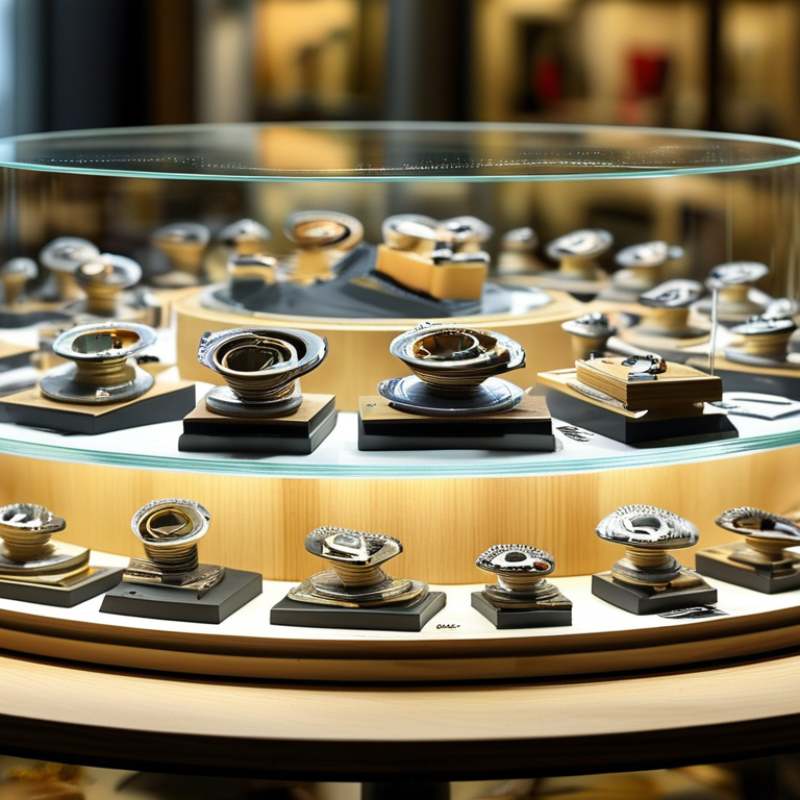
Rotating collection tables are freestanding display units with circular, tiered, or carousel-style platforms. Their central shaft supports shelves, hooks, trays, or baskets. A bearing system enables smooth rotation, while a weighted base reduces tipping. Some models use locking wheels and adjustable tiers. These details affect safety, loading capacity, and buyer usability.
Their main application is organized product discovery. In retail, rotation exposes more items within a small footprint, especially accessories, books, packaged goods, and seasonal products. At trade exhibitions, the structure creates a 360-degree viewing point. Libraries and hospitality spaces may use them for brochures, samples, or curated collections. The U.S. Census Bureau reported that e-commerce represented about 16% of U.S. retail sales in 2024. Physical displays therefore need stronger visual engagement, not merely storage. Eurostat reported that 77% of EU internet users purchased goods or services online in 2024. Buyers increasingly compare digital convenience with in-store browsing.
For global procurement, check steel thickness, shelf spacing, rotation resistance, carton dimensions, and replacement-part access. A table can look elegant but rotate poorly under uneven loading. That is easy to miss. I would also request load testing and assembly instructions before approval. EN 16121 and related commercial-storage guidance can inform evaluation, but requirements vary by market and application. The structure should match the collection, customer flow, and expected handling frequency.
Sources: U.S. Census Bureau, Quarterly Retail E-Commerce Sales, 2024; Eurostat, E-commerce Statistics for Individuals, 2024.

Rotating collection tables are mechanical platforms that transfer products, power, signals, fluids, or data between stationary and rotating sections. Their main structure usually includes a rotary bearing, drive system, indexing mechanism, table plate, and optional slip-ring or rotary-union modules.
The chart compares common application sectors by the typical number of integrated interface groups specified in rotating collection table systems. Interface groups may include electrical power, control signals, industrial data, pneumatic lines, hydraulic lines, cooling water, vacuum, fiber optics, or encoder feedback. The values are engineering reference figures rather than market-share data.
Top 10 Rotating Collection Tables for Global Buyers
Key Criteria for Comparing Rotating Collection Tables Worldwide
A rotating collection table must fit the collection, not merely fill floor space. Compare diameter, height, usable surface, weight capacity, and rotation speed. In supplier audits, I also check bearing noise, wobble, edge finishing, and anti-tip stability. A quiet turntable feels premium. A loose one damages trust quickly.
Material selection deserves evidence. Ask for recycled-content percentages, coating details, fire-performance documents, and repair guidance. The UNEP Global Resources Outlook 2024 reports that global resource extraction could rise by 60% by 2060 without major changes. Therefore, replaceable parts and durable finishes matter more than attractive packaging. Yet sustainability claims often remain vague. Request test records, not promises.
International comparison also includes logistics. The World Bank’s Logistics Performance Index 2023 evaluates 139 economies through customs, infrastructure, shipment performance, and timeliness. These factors affect delivered cost and launch schedules. Compare packed dimensions, container efficiency, assembly time, and spare-part availability. Confirm tolerances in writing. Small differences become expensive across borders.
A practical scorecard can assign points for safety, durability, maintenance, sustainability, and landed cost. I would add a “proof quality” category. It exposes missing data. No scorecard is perfect. Real-world trials may still overturn a spreadsheet winner. Rotate loaded samples for several hours, inspect floor contact, and record noise before approving volume production.
Global buyers need more than a round display surface. The best rotating collection tables combine stable rotation, useful storage, and clear product access. I look for ten practical formats. They include manual, powered, indexed, height-adjustable, mobile, nesting, glass-top, solid-top, heavy-duty, and compact tables. This range suits boutiques, trade events, galleries, and shared retail spaces. Do not choose by appearance alone.
In real purchasing work, I check rotation speed, bearing noise, edge protection, and maximum load. A tabletop should turn smoothly without drifting after release. Powered units also need documented voltage, plug, and safety information for the destination market. Lockable casters help on polished floors, while adjustable feet reduce wobble on older surfaces. Request drawings, material details, packaging dimensions, and test records before approval. Photos are useful, but they can hide weak joints.
My own preference once favored powered tables for faster product viewing. That choice was not always sensible. Manual rotation often costs less, ships more easily, and needs fewer service parts. For fragile collections, a slower turn and raised rim may prevent accidental falls. For heavier displays, steel framing and a reinforced top deserve priority. Leave space for hands, cartons, and cleaning tools. Small flaws show quickly. A 10-centimeter service gap can matter more than decorative trim.
Top 10 Rotating Collection Tables for Global Buyers
The top ten models differ mainly in materials, load control, rotation quality, and maintenance needs. Powder-coated steel frames offer strong impact resistance and stable support. World Steel Association reported 1.89 billion tonnes of crude steel production in 2023. That scale supports reliable sourcing, but steel tables can become heavy during installation. Aluminum frames reduce handling weight and resist corrosion. The International Aluminium Institute recorded 70.6 million tonnes of primary aluminum output in 2023. Recycled aluminum may improve sustainability, although suppliers should verify the actual recycled content.
Tempered glass surfaces create a clear, premium viewing area. They also show fingerprints quickly. Laminated wood panels feel warmer and often hide minor scratches better. High-pressure laminate performs well in busy retail environments, but damaged edges can absorb moisture. Acrylic is light and bright, though it scratches more easily than glass. The strongest tables usually combine a steel base, sealed board, and replaceable bearing assembly. ISO 7170 testing principles help assess stability, strength, and durability for storage furniture. Buyers should request equivalent load and cycle-test records. Rotation speeds around 2 to 6 revolutions per minute suit most browsing displays. Faster movement may look impressive, yet it can disturb small objects. Some ranking judgments remain subjective. A dusty showroom can reverse the expected performance order. Before purchasing, test one loaded table for noise, wobble, cable access, and cleaning time. That practical trial often reveals weaknesses hidden in technical sheets.
| No. | Table Type | Typical Materials | Common Diameter / Size | Typical Load Capacity | Rotation Performance | Bearing or Drive System | Key Features | Best-Fit Applications |
|---|---|---|---|---|---|---|---|---|
| 1 | Manual Lazy Susan Collection Table | Powder-coated steel frame, MDF or laminated plywood top, stainless-steel turntable hardware | 900–1,500 mm diameter | 80–250 kg | 360° manual rotation; approximately 1–3 revolutions per minute under normal use | Sealed ball-bearing turntable ring | Low purchase cost, no power supply, simple maintenance, compact shipping profile | Retail displays, product launches, small showrooms, point-of-sale areas |
| 2 | Motorized Display Collection Table | Powder-coated steel or aluminum frame, tempered glass, laminate, or solid-surface top | 800–2,000 mm diameter | 100–500 kg | Variable electric rotation, commonly 0.5–5 rpm; reversible on selected controllers | Gear motor with ball-bearing support ring | Continuous movement, speed control, optional remote control, stable presentation of high-value products | Automotive components, electronics, furniture, premium retail displays |
| 3 | Heavy-Duty Industrial Turntable | Welded carbon-steel base, steel deck plate, anti-slip rubber or chequered surface | 1,000–4,000 mm diameter | 1,000–10,000 kg | Low-speed controlled rotation, commonly 0.1–2 rpm | Cross-roller bearing, slewing ring, or heavy-duty roller track with geared drive | High structural rigidity, impact resistance, mechanical locking positions, optional safety guards | Manufacturing lines, welding stations, large machinery handling, pallet positioning |
| 4 | Glass Showcase Rotating Table | Tempered safety glass, aluminum or stainless-steel frame, engineered wood cabinet panels | 500–1,200 mm diameter | 30–150 kg | Smooth electric rotation, typically 1–4 rpm | Quiet sealed bearing with low-voltage motor | High visibility, integrated lighting compatibility, dust protection, refined appearance | Jewelry, watches, collectibles, cosmetics, museum and gallery displays |
| 5 | Outdoor Weather-Resistant Rotating Table | Marine-grade stainless steel or aluminum, UV-stabilized compact laminate, outdoor-rated seals | 800–1,800 mm diameter | 80–400 kg | Manual or motorized rotation, generally 0.5–3 rpm | Corrosion-resistant stainless-steel bearing assembly | Resistance to moisture, ultraviolet exposure, and temperature variation; drainage provisions may be included | Garden centers, outdoor hospitality areas, building-material displays, event installations |
| 6 | Portable Trade Show Rotating Table | Lightweight aluminum tubing, honeycomb panel, ABS edging, fabric or printed graphic wrap | 500–1,000 mm diameter | 20–100 kg | Battery or mains-powered rotation, usually 1–3 rpm | Compact ball-bearing hub with low-power motor | Tool-free assembly, foldable or modular construction, carry cases, rapid installation | Trade shows, touring exhibitions, temporary retail campaigns, promotional events |
| 7 | Height-Adjustable Rotating Worktable | Powder-coated steel column, laminated worktop, aluminum or steel rotating platform | 600–1,400 mm diameter | 100–600 kg | Manual or powered rotation, approximately 0.2–2 rpm | Slewing bearing with telescopic, screw, or hydraulic height adjustment | Improved ergonomic access, adjustable working height, optional foot controls, stable low-speed operation | Assembly, inspection, packaging, craft production, accessible workstations |
| 8 | Multi-Tier Rotating Collection Table | Powder-coated steel or aluminum structure, tempered glass, acrylic, or laminated shelves | 600–1,500 mm diameter; 2–5 tiers | 25–200 kg total | Manual or electric rotation, typically 1–4 rpm | Central spindle with individual shelf supports or a shared rotating ring | High display density, strong vertical merchandising, adjustable shelves, efficient use of floor space | Gift shops, bookstores, accessory displays, collectible and sample presentations |
| 9 | Conveyor-Integrated Rotating Table | Welded steel frame, stainless-steel or coated deck, polyurethane rollers, industrial guarding | 800–2,500 mm diameter | 250–2,000 kg | Programmable rotation, commonly 1–10 rpm depending on line speed and load | Powered roller drive, chain drive, or geared slewing ring | Automatic indexing, sensor integration, repeatable positioning, compatibility with production-control systems | Packaging lines, sorting systems, filling operations, automated material handling |
| 10 | Custom Premium Collection Table | Combination of stainless steel, solid surface, natural stone, engineered wood, glass, or decorative metal | Made to order; commonly 700–2,500 mm diameter | 50–1,000 kg, subject to engineering design | Manual, motorized, indexed, or sensor-controlled rotation according to specification | Selected according to diameter, load, noise requirement, and duty cycle | Tailored dimensions, integrated lighting or digital controls, special finishes, concealed mechanisms | Flagship interiors, museums, luxury retail, architectural installations, specialized product presentation |
For global buyers, a rotating collection table is more than a visual fixture.
Safety begins with the rotation mechanism, not the sales photograph. Specify the maximum load, center of gravity, brake performance, and pinch-point protection.
ISO 12100 recommends documented machinery risk assessments.
IEC 60204-1 guides electrical safety for powered models.
Ask for test records, material declarations, and a sample inspection before approval.
A table should rotate smoothly. It should also stop safely. Field checks should include tilted-floor testing, cable inspection, and repeated-cycle testing.
Do not accept “industrial grade” without measurable limits.
Compliance depends on the destination market. Verify product, electrical, fire, packaging, and accessibility requirements with a qualified local reviewer.
The World Bank’s 2023 Logistics Performance Index reports 44 transit days, about 60% of total shipment time. UNCTAD’s Review of Maritime Transport 2023 states that over 80% of global merchandise trade moves by sea.
Request invoices, packing lists, origin details, dimensions, gross weight, and accurate customs classification.
A 1.2-meter table needs reinforced corners and moisture protection, not only a strong pallet. Compare total landed cost, including duties, port charges, insurance, storage, and local delivery.
Support is often overlooked.
Require installation drawings, spare parts, response times, and video troubleshooting.
Procurement reviews sometimes reveal weak manuals after successful factory audits. That gap matters.
A lower price can become expensive downtime.