Leave Your Message

How to Choose the Best Rotary Collecting Table Machine

Choosing the right Rotary Collecting Table Machine can improve line balance, product handling, and operator efficiency. However, the best model depends on your container size, production speed, floor space, and downstream equipment. A machine handling small bottles may struggle with unstable jars or heavy containers. Real production conditions matter.

Begin with the collection diameter, working height, and required output per minute. Check whether the table supports smooth accumulation without scratching, tipping, or creating pressure points. Stainless steel construction is valuable in washdown areas, while adjustable guides help manage different container shapes. Confirm motor capacity, speed control, emergency stops, and noise levels before purchase. Small details become expensive problems later.

Ask suppliers for test results, layout drawings, maintenance instructions, and references from similar production lines. A reliable manufacturer should explain limits clearly, not promise unlimited performance. Inspect the drive system, bearings, control panel, and spare-parts availability. Service response also matters when a table stops during a busy shift. The machine should connect cleanly with conveyors, fillers, cappers, or packing systems.

No machine is perfect. A polished brochure cannot replace a floor trial. Watching containers move across the table reveals vibration, jams, and awkward operator access. We should also question whether maximum speed is realistic for daily use. A slower, stable machine may deliver better output than a faster model requiring constant adjustment. Choose based on measurable evidence, practical experience, and long-term reliability. That is the foundation for selecting a Rotary Collecting Table Machine that fits your process, not merely your budget.
How to Choose the Best Rotary Collecting Table Machine

What a Rotary Collecting Table Machine Is and How It Works

How to Choose the Best Rotary Collecting Table Machine

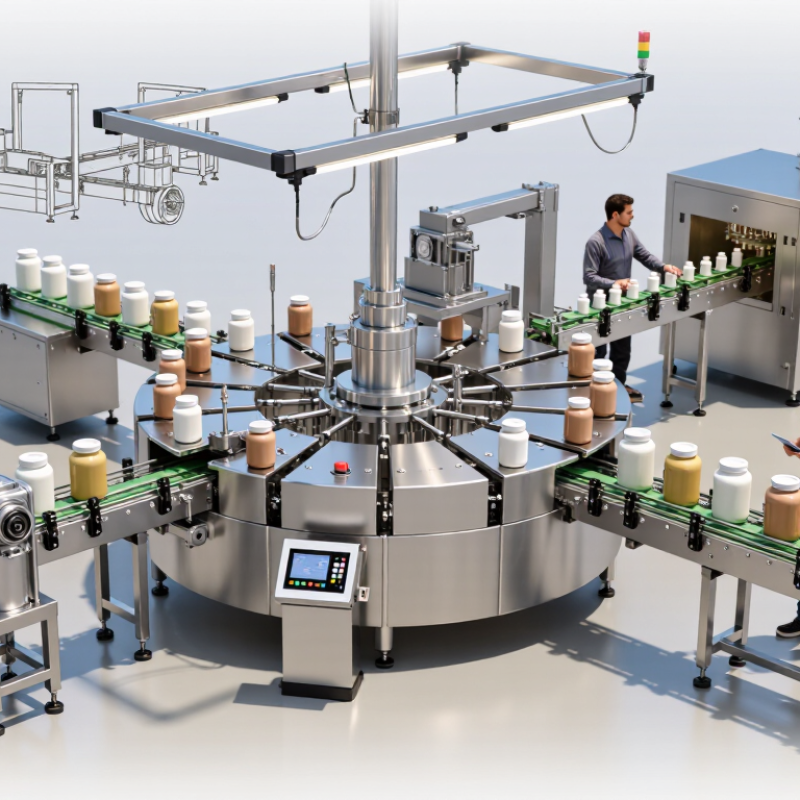
A rotary collecting table machine receives products from an upstream conveyor and arranges them on a rotating surface. Operators can then inspect, pack, or redirect items with fewer interruptions. Its operation is simple but not careless. A motor turns the table at an adjustable speed, while guides control product movement near the rim. Sensors can detect gaps, jams, or table overloading.

The machine’s value becomes clearer during uneven production. If a filling or labeling unit pauses, the table provides temporary accumulation. PMMI’s 2023 State of the Industry report valued U.S. packaging machinery shipments at about 10 billion dollars, showing the scale of equipment investment. However, that figure covers complete packaging systems, not rotary tables alone. This distinction matters. A larger machine is not automatically better.

Selection should begin with product size, weight, shape, and surface friction. A 1.2-meter table may suit small bottles, while heavier containers need stronger drives and reinforced supports. The International Federation of Robotics reported 541,302 new industrial robots installed worldwide in 2023. This reflects wider automation growth, but a rotary table still needs practical human access. Check accumulation capacity, speed range, cleanability, noise, and emergency-stop access. I would also test real containers, not only samples. Products can slide, lean, or collide unexpectedly. The weak point is often the guide rail, not the motor.

How to Choose the Best Rotary Collecting Table Machine

What a Rotary Collecting Table Machine Is and How It Works

A rotary collecting table receives products from an upstream conveyor, turns them through a circular accumulation area, and provides a steady flow to the next processing stage. The chart compares the theoretical surface area of reference table diameters. A larger diameter provides more potential accumulation space, but the final usable area depends on product size, guide-rail clearance, table speed, and the required buffer time.

Key Specifications for Comparing Rotary Collecting Table Machines

How to Choose the Best Rotary Collecting Table Machine

Key Specifications for Comparing Rotary Collecting Table Machines

A rotary collecting table should match your line speed, container size, and available floor space. Start with table diameter and working height. A larger diameter offers more buffering, but it also needs more clearance. Measure the smallest and largest containers before selecting the surface width. Check the stated load capacity, not only the motor rating. Filled containers can create uneven pressure near the discharge area.

Speed control is equally important. Look for adjustable rotation, smooth starting, and stable low-speed performance. Sudden movement may tip lightweight containers or cause scratches. Variable-frequency control can support different production rates. Ask for the actual speed range under load. An empty-table test can look impressive. It may not represent daily operation. Surface material, edge design, and guide rails also deserve close inspection. Stainless steel is practical for cleanable areas, while a low-friction surface may protect delicate packaging.

Review the electrical system, emergency stop access, noise level, and cleaning procedure. Controls should be simple enough for operators wearing gloves. Confirm whether the machine can connect with upstream and downstream conveyors. Request drawings, load tests, and maintenance intervals from the supplier. A compact footprint is useful, but cramped access can increase service time. In real facilities, this trade-off is often underestimated. Watch the machine run with your containers, at your fastest planned rate, before approval. That practical test may reveal vibration, poor accumulation, or awkward operator access that specifications cannot show.

How to Match Table Design with Production and Packaging Needs

How to Choose the Best Rotary Collecting Table Machine

Choosing a rotary collecting table begins with the package, not the machine brochure. Measure container diameter, height, weight, and surface stability. A narrow bottle may tip when the table accelerates. A wide jar may need more usable collection space. The table diameter should support the required buffer without blocking operator access. Keep the loading height comfortable for repeated handling.

Production speed also changes the design decision. A line running 60 containers per minute needs different accumulation capacity than a slower filling line. Check the conveyor width, transfer direction, and expected downtime between packaging steps. Variable-speed control helps operators match the table to changing output. Gentle guides are important for lightweight containers. Excessive pressure can create scratches, jams, or unstable stacks.

Packaging details deserve equal attention. Smooth surfaces simplify cleaning, especially around food, cosmetic, or pharmaceutical packaging areas. Choose corrosion-resistant construction when regular washdown is expected. Confirm that guards, emergency stops, and control access support safe operation. A larger table can look safer, but that assumption is not always correct. It may consume valuable floor space and force awkward reaching. I have seen layouts fail because the table was selected before measuring the operator’s working zone. Leave room for inspection, carton movement, and routine maintenance. Test the proposed design with real containers, not only drawings. A short trial often reveals vibration, noise, or poor accumulation that specifications overlook.

How to Choose the Best Rotary Collecting Table Machine - How to Match Table Design with Production and Packaging Needs
Production or Packaging Need Recommended Table Design Typical Table Diameter Typical Operating Speed Container or Product Compatibility Key Selection Considerations
Low-volume production and frequent product changes Compact rotary collecting table with adjustable side guides and tool-less changeover parts 600–800 mm 20–60 containers/min Small bottles, jars, cans, cartons, and lightweight pouches Prioritize a small footprint, easy cleaning, quick guide adjustment, and accessible controls over maximum accumulation capacity.
Medium-speed filling and labeling lines Standard rotary accumulation table with variable-speed drive and stainless-steel product-contact surfaces 900–1,200 mm 60–150 containers/min Round or oval containers with stable bases; common in food, beverage, personal-care, and household-product lines Match the table inlet height and conveyor width to upstream and downstream equipment to reduce transfers, tipping, and product gaps.
High-throughput continuous packaging Large-diameter rotary collecting table with powered infeed, controlled discharge, and accumulation monitoring 1,200–1,800 mm 150–300 containers/min Rigid bottles, jars, cans, and other free-flowing products with consistent dimensions Use a larger working surface and stable speed control to absorb short downstream interruptions without creating excessive back pressure.
Temporary accumulation between machines Accumulation table configured as a buffer between a filler, capper, labeler, cartoner, or case packer 900–1,500 mm Based on line speed Products that can tolerate controlled contact and short dwell times Calculate required buffer time from line speed and table capacity; avoid using the table as a substitute for a dedicated long-term accumulation conveyor.
Delicate, unstable, or easily scratched containers Low-friction rotary table with soft contact surfaces, adjustable guide rails, and gentle-speed control 800–1,200 mm 20–100 containers/min Lightweight plastic bottles, decorated containers, thin-wall packs, and products with sensitive labels Control side pressure and rotational speed; verify that the table surface and guides do not mark, scuff, or deform the package.
Heavy containers or rigid metal packaging Reinforced rotary table with a rigid frame, high-load bearing system, and durable wear-resistant surface 1,000–1,800 mm 30–150 containers/min Glass bottles, metal cans, filled containers, and heavy jars with stable bases Check maximum distributed load, bearing capacity, frame rigidity, and the effect of product weight on acceleration and discharge performance.
Products requiring hygienic or washdown operation Open-frame stainless-steel design with sloped surfaces, sealed bearings, removable guides, and minimized product traps 800–1,500 mm 30–150 containers/min Food, beverage, pharmaceutical, and personal-care containers Specify suitable stainless-steel construction, drainage-friendly geometry, hygienic welds, and components compatible with the planned cleaning chemicals.
Small or irregularly shaped products Rotary table with customized guide rails, product-control fingers, or a dedicated transfer arrangement 600–1,200 mm 20–100 containers/min Small cartons, irregular bottles, trays, and products with limited base stability Run product trials before finalizing the design because shape, center of gravity, friction, and orientation strongly affect collection behavior.
Multiple container sizes on one line Variable-speed table with adjustable height, width guides, quick-change tooling, and recipe-based settings 800–1,500 mm 30–150 containers/min Several bottle, jar, can, or carton sizes handled on the same packaging line Define the minimum and maximum product dimensions, changeover time, guide adjustment range, and acceptable speed for every format.
Limited floor space or compact line layout Small-footprint rotary table with integrated discharge conveyor and controls positioned for operator access 600–900 mm 20–80 containers/min Stable, lightweight products with moderate accumulation requirements Measure conveyor centerlines, operator clearance, maintenance access, and the space required to remove full containers or packaging materials.
Manual packing or visual inspection after filling Operator-accessible rotary table with a controlled presentation area and adjustable accumulation speed 900–1,500 mm 20–100 containers/min Products requiring manual packing, sorting, checking, or secondary packaging Consider ergonomic working height, operator reach distance, product presentation, guarding, and safe access to the collection area.
Integration with automated downstream packaging Servo-controlled or variable-speed rotary table with sensors, line-control communication, and synchronized discharge 900–1,800 mm 60–300 containers/min Uniform products transferred to cartoners, case packers, palletizers, or robotic pick-and-place systems Confirm signal interfaces, sensor locations, conveyor elevations, discharge timing, guarding, and the required accumulation logic with the complete line supplier.
Planning ranges are typical application guidelines rather than guaranteed machine ratings. Final selection should be validated using the actual product dimensions, weight, material, line speed, accumulation time, cleaning method, and transfer conditions.

Safety, Sanitation, Installation, and Maintenance Requirements

How to Choose the Best Rotary Collecting Table Machine

Safety, Sanitation, Installation, and Maintenance Requirements

A rotary collecting table should protect operators during fast production cycles. Check for fixed guards around drive components and clearly reachable emergency stops. Pinch points often appear beneath the rotating surface, where attention is easily lost. Use lockout procedures before cleaning, adjustment, or inspection. Electrical grounding, overload protection, and stable footing also deserve verification. A machine that looks safe may still hide risks beneath its frame.

Sanitation depends on more than stainless steel construction. Select smooth, food-contact surfaces with sealed welds and minimal crevices. The table should drain quickly, without trapped water around legs or bearings. During a site inspection, look beneath the disc and around transfer rails. These areas collect crumbs, oil, and cleaning chemicals. Removable guards can improve access, although frequent removal may discourage proper cleaning. That practical weakness should be discussed honestly with operators.

Installation affects both safety and service life. The floor must be level, and operators need clear space around controls and discharge points. Confirm electrical capacity before delivery, then test rotation, speed control, sensors, and emergency stops without product. Maintenance records should track lubrication, belt tension, bearing noise, and unusual vibration. A short daily inspection often catches loose fasteners early. Still, checklists are imperfect. One overlooked seal can create repeated sanitation problems. Review the machine after its first production week, when real operating habits become visible.

How to Evaluate Suppliers, Costs, and Long-Term Operating Value

How to Choose the Best Rotary Collecting Table Machine

How to Evaluate Suppliers, Costs, and Long-Term Operating Value

A rotary collecting table should match your line speed, product shape, and accumulation needs. Ask suppliers to demonstrate your actual containers, not generic samples. Measure transfer stability, changeover time, noise, and product scuffing. Small failures become expensive during an eight-hour shift. Very expensive.

Deloitte’s 2024 Smart Manufacturing and Operations Survey found that 86% of manufacturing executives expect smart manufacturing to drive competitiveness within five years. That expectation makes controls and data access important. Request production counters, fault history, remote diagnostics, and clearly defined data ownership. A machine with lower purchase cost may create higher labor costs when operators cannot identify recurring jams.

Compare total cost over five years. Include installation, training, electricity, cleaning, lubrication, spare parts, and planned downtime. Ask for documented cycle capacity at your required load, plus recorded changeover results. Review the supplier’s response time and local service coverage. PMMI industry reports continue to identify labor availability and flexible automation as major packaging investment concerns. Design simplicity often protects value better than excessive features. I would still challenge every projected savings figure. Assumptions about uptime can be optimistic. Require evidence from comparable applications, acceptance-test criteria, warranty exclusions, and a written parts list. A reliable supplier should explain what happens after the sale, when the table is dirty, misaligned, or running a difficult product.